Legal AI Careers: Jobs, Salaries & How to Break into Legal Tech (2026 Guide)
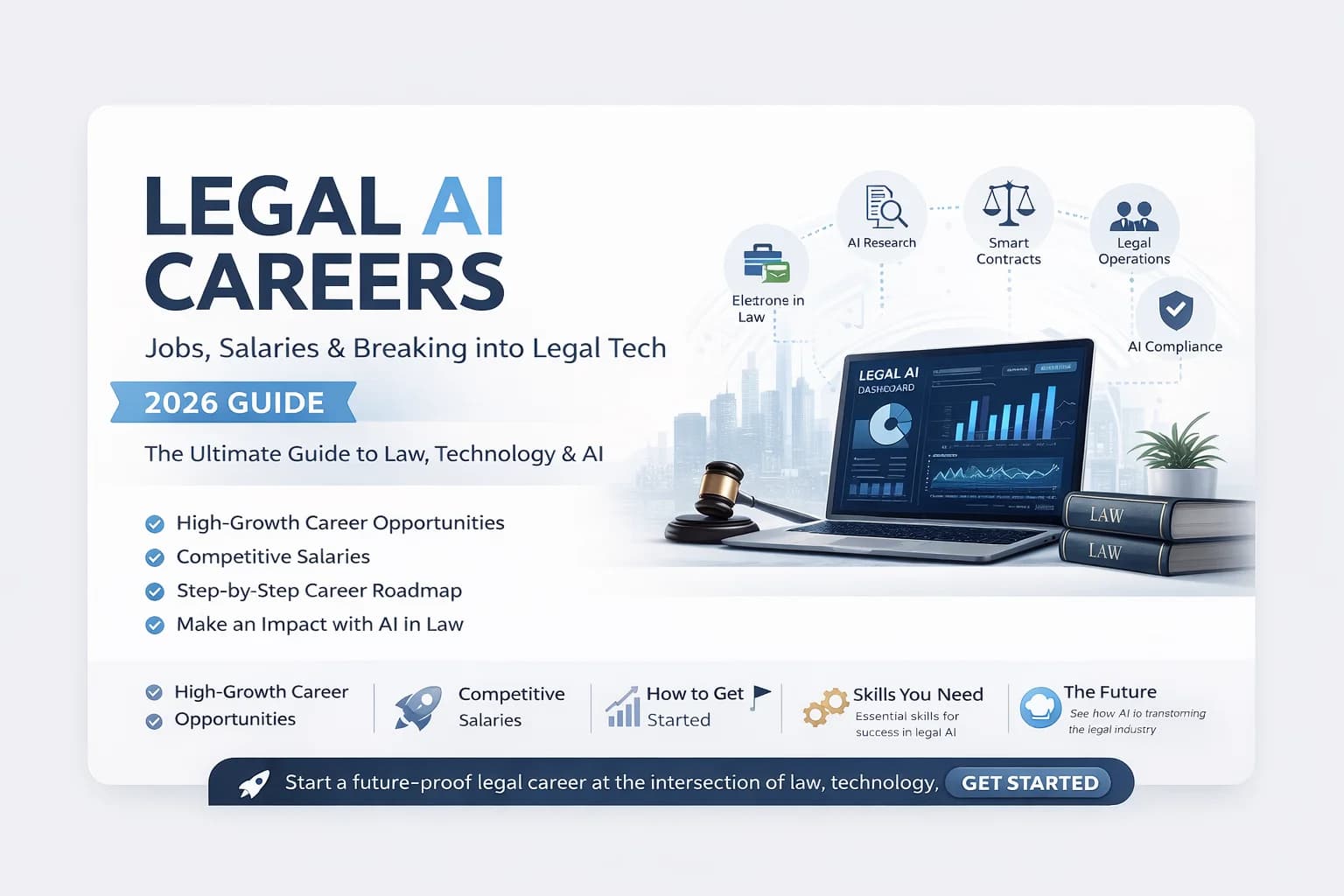
Legal AI careers are rapidly emerging as one of the most exciting opportunities at the intersection of law and technology in the past years and are poised for exponential growth in the next decade as AI is rapidly disrupting the legal industry.
Law firms, startups, and large corporations are investing heavily in artificial intelligence to automate legal work, reduce costs, and improve efficiency. As a result, entirely new career paths are opening up—many of which didn’t exist just a few years ago.
Whether you're a lawyer, a student, or someone looking to transition into tech, this guide will show you everything you need to know about legal AI careers in 2026.
What Are Legal AI Careers?
Legal AI careers involve using artificial intelligence tools and systems to support, automate, or enhance legal work.
Instead of manually reviewing documents or conducting research, professionals now use AI to:
Analyze contracts
Automate legal workflows
Predict legal outcomes
Assist with compliance and regulation
These roles sit at the intersection of:
Law
Technology
Data and automation
It has also opened up the opportunities to a broader audience, not restricted to lawyers or developers, although you will possess unfair advantages as a tech-minded lawyer.
Types of Legal AI Jobs
Legal AI is not a single job—it’s a category of roles with different skill sets and entry points.
Legal AI Engineer
These professionals build and customize AI tools for legal use.
What they do:
Develop AI models for document analysis
Work with legal datasets
Integrate AI into legal workflows
Best for: people with technical or programming backgrounds
Legal Operations Specialist
Legal ops professionals focus on improving efficiency within legal teams.
What they do:
Implement legal tech tools
Optimize workflows
Manage legal software systems
Best for: beginners and non-technical professionals
AI Compliance Analyst
This role ensures AI systems follow legal and regulatory requirements.
What they do:
Monitor AI usage for compliance
Work with regulations (GDPR, etc.)
Assess risk in AI systems
Best for: people interested in law + policy
Legal Prompt Engineer
A newer role focused on using AI tools effectively.
What they do:
Write prompts for legal AI tools
Optimize AI outputs
Improve workflow efficiency
Best for: non-coders with strong analytical thinking
Legal AI Salaries (2026)
Salaries in legal AI vary depending on role, experience, and location—but they are generally competitive. To understand how salaries vary among specific roles, see our detailed salary guide here.
Average Salary Ranges
Entry-level roles: $75,000 - 100,000 for the US (€35,000 – €60,000 for Europe)
Mid-level roles: $100,000 - $200,000 for the US (€60,000 – €100,000 for Europe)
Senior roles: $200,000 for the US (€100,000+ for Europe)
By Role
Legal AI Engineer: highest earning potential
Legal Operations: stable mid-range salaries
Compliance roles: strong demand, growing salaries
Salaries increase quickly with experience because this is still a talent-short market.
Skills You Need for Legal AI Careers
You don’t need to master everything—but you do need a mix of skills across three areas.
1. Legal Knowledge
Contracts and agreements
Regulatory frameworks
Legal workflows
2. Technical Skills
Familiarity with AI tools
Basic data analysis
Understanding automation systems
Although coding skills aren’t required, demonstrating basic tech familiarity and curiosity is essential.
3. Soft Skills
Problem-solving
Communication
Process improvement
These are often what differentiate successful candidates - highlighting process improvement from past work experience on your resume (follow these tips here).
How to Get a Job in Legal AI
Breaking into legal AI is more achievable than most people think. Here’s a simple roadmap:
Step 1: Choose a Career Path
Start with one role:
Legal ops
Compliance
AI support
Engineering (if technical)
Step 2: Learn the Basics
Focus on:
How legal teams work
How AI is used in law
Common legal tech tools
Step 3: Build Practical Skills
Use real tools (even free versions)
Practice analyzing legal documents
Create small workflow projects
Step 4: Apply Early
Don’t wait until you feel fully ready.
Target:
Entry-level legal tech roles
Legal operations positions
Compliance assistant jobs
Step 5: Keep Improving While Working
The fastest way to grow in this field is on the job.
Remote Legal AI Jobs
One of the biggest advantages of legal AI careers is flexibility.
Many roles are:
Fully remote
Hybrid
Freelance-friendly
Common remote roles:
Legal tech analyst
AI workflow specialist
Compliance analyst
This makes legal AI especially attractive for career changers. Browse remote legal AI roles on LexAI jobs.
Future of Legal AI Careers
Legal AI is not a trend—it’s a long-term shift in how legal work is done.
Key trends:
AI adoption in law firms is accelerating
Routine legal work is being automated
Demand for hybrid professionals (law + tech) is increasing
New roles are being created every year
The biggest opportunity is getting in early while competition is still low.
FAQ
Do you need a law degree for legal AI jobs?
No. Many roles prioritize skills and experience over formal education.
Do you need to know how to code?
Not for most roles. Coding is only required for technical positions like AI engineering.
Are legal AI jobs in demand?
Yes—and demand is growing rapidly as companies adopt AI tools.
How long does it take to break into legal AI?
Most beginners can land a role within 3–6 months with focused effort.
Final Thoughts
Legal AI careers offer a rare combination of:
High growth potential
Strong salaries
Low entry barriers (compared to traditional law)
If you’re looking for a future-proof career at the intersection of law and technology, this is one of the best paths available right now.
The key is simple:
Pick a direction
Build practical skills
Take action early
Because the biggest advantage in legal AI today isn’t experience—it’s timing.
Next Steps
To move forward:
Learn the core skills ( see recommended courses here)
Explore specific roles on LexAI Jobs
Start applying as soon as possible
The legal industry is changing fast—and those who adapt early will have the biggest opportunities.